The best Semrush alternative for most teams is SE Ranking: its Core plan costs $129 a month ($103.20 billed annually) and covers the same core jobs (rank tracking, keyword research, competitor research, backlinks and site audits) with four times the tracked keywords of Semrush's entry plan. If you want something much cheaper, Serpstat gives you a full suite for $50 a month and KeySearch starts at $24. If you want free, Google Search Console, Bing Webmaster Tools, Ahrefs Free and Semrush's own free plan cover a single small site surprisingly well.
Below: what Semrush actually costs now (it changed its plans in 2026), ten alternatives with prices checked on each vendor's pricing page in October 2026, a free stack, and a quiz that matches you to one tool based on what you use Semrush for.
Key takeaways
- Semrush's entry SEO plan costs $139.95 a month ($117.33 billed annually) and tracks 500 keywords; AI prompt tracking starts on the $199 Starter plan.
- SE Ranking Core ($129, or $103.20 billed annually) is the closest like-for-like replacement, with 2,000 keywords tracked daily and 10 projects.
- The cheapest real suites are KeySearch ($24/month), SpyFu ($39, or $29 billed annually) and Serpstat ($50).
- Ahrefs Lite ($129) is barely cheaper than Semrush; switch for its link data, not to save money.
- If you mostly open Semrush to plan blog posts you never get around to writing, a content-and-links tool like Outrank ($99/month) replaces the job, not the dashboard.
What Semrush costs in October 2026
Before you shop around, know what you are comparing against. Semrush reorganised its pricing page in 2026. The old Pro, Guru and Business names are gone from the main table, replaced by four "SEO + AI Search" tiers:
| Semrush plan | Monthly | Billed annually | What you get |
|---|---|---|---|
| SEO | $139.95 | $117.33/mo | 5 websites, 500 keywords tracked daily, keyword research, competitor analysis, site audit |
| Starter | $199 | $165.17/mo | Adds 50 tracked AI prompts a day and AI brand reporting |
| Pro+ | $299 | $248.17/mo | 15 websites, 1,500 keywords, historical data, content optimization, multi-location tracking |
| Advanced | Custom quote | Custom | 40+ websites, 5,000+ keywords, API, team features |
There is also a free plan (one project, 10 reports a day) and a 7-day trial. Extra users cost extra on every paid tier.
So the honest benchmark for "cheaper than Semrush" is $117 to $140 a month for one user and 500 tracked keywords. Several tools below beat that on price and on limits. None beats Semrush on breadth: it still bundles paid search data, traffic analytics, local, social and PR toolkits that most alternatives don't have. If you want to check whether its data is worth the premium, our guide to how accurate Semrush is shows how to check its estimates against your own Search Console data in 15 minutes.
All 10 Semrush alternatives compared
Prices are each vendor's own public pricing in US dollars, checked October 19, 2026. Click any column to sort.
Semrush alternatives compared (October 2026)
| SEO PowerSuite Professional | — | $29.10/mo | Free desktop version | Many sites with no per-project fees |
| KeySearch Starter | $24/mo | $20/mo | 7-day trial | Bloggers and niche sites |
| SpyFu Basic | $39/mo | $29/mo | 30-day money-back | Competitor and PPC research |
| Mangools Basic | $49/mo | $29.90/mo | Free account, 48-hour refund | Beginner-friendly keyword research |
| Serpstat Individual | $50/mo | — | 7-day trial ($1 card check) | Full suite on a small budget |
| Moz Pro Standard | $99/mo | $79/mo | Free trial on Medium plan | Link metrics and Domain Authority |
| Outrank | $99/mo | $83.25/mo | 3-day trial | Publishing content and earning backlinks |
| SE Ranking Core | $129/mo | $103.20/mo | 14-day trial | Closest all-round replacement |
| Ahrefs Lite | $129/mo | $107.50/mo | Ahrefs Free (own sites) | Backlink and competitor research |
| Semrush SEO (benchmark) | $139.95/mo | $117.33/mo | Free plan, 7-day trial | Breadth across SEO, ads and market data |
Click a column header to sort.
Seobility is the tenth tool. It prices in euros (€59.90 a month for Premium), so it sits in the budget section below rather than in the dollar table.
The best Semrush alternatives, by job
1. SE Ranking: the closest all-round replacement
Price: $129/month, or $103.20/month billed annually (Core plan). 14-day free trial, no card.
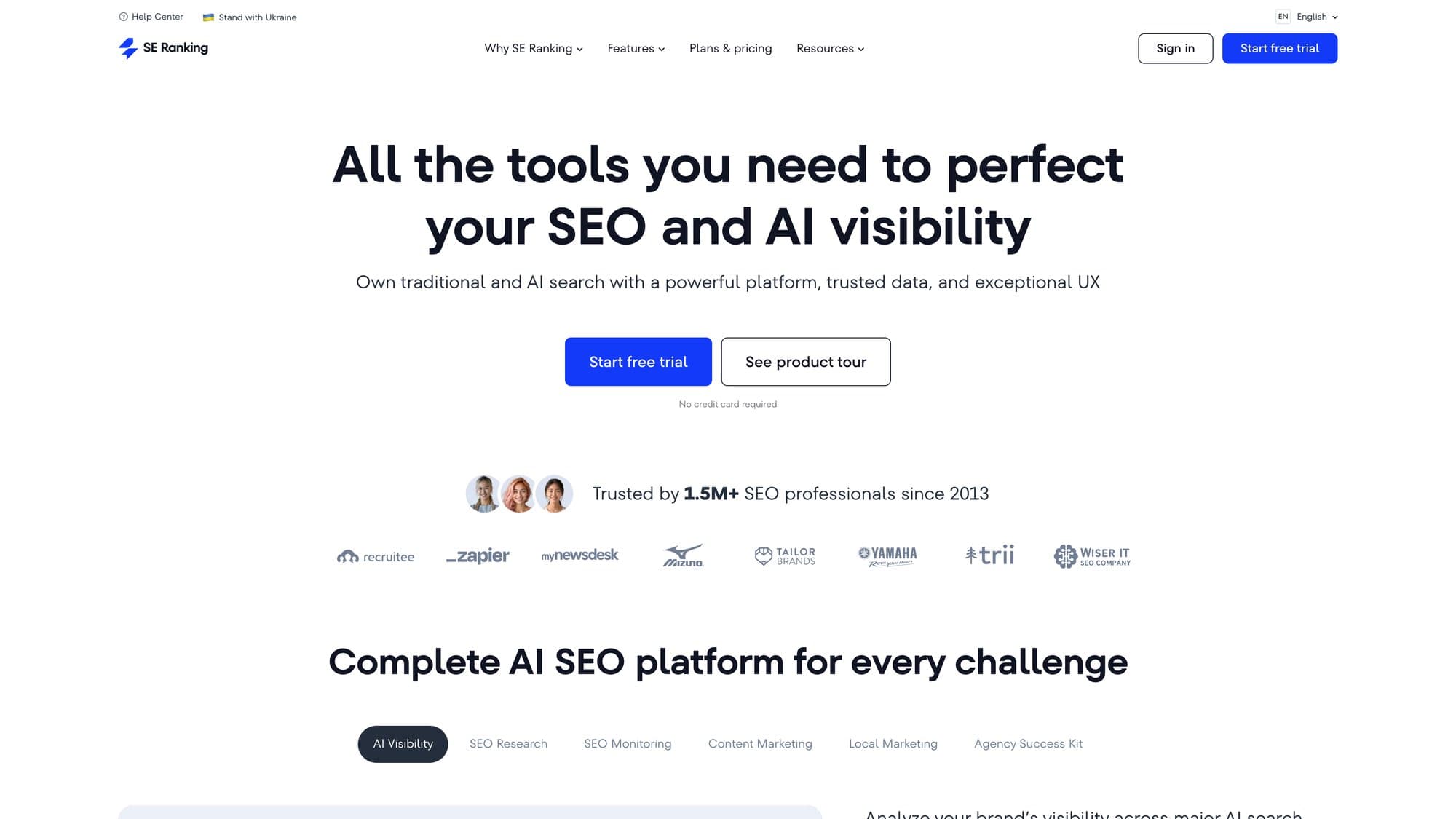
SE Ranking is what most SEOs name when you ask for "Semrush, but cheaper". In 2026 it moved to Core, Growth and Enterprise plans. Core includes 10 projects, 2,000 keywords tracked daily, 250,000 audited pages a month, backlink research, and 100 AI prompts tracked daily across five AI assistants. That is four times Semrush's tracked-keyword allowance for less money.
Where it falls short: one manager seat on Core, a smaller paid search dataset, and no equivalent to Semrush's traffic and market toolkits. The Growth plan ($279/month) adds three seats and 5,000 keywords.
Pick it if you use Semrush for client rank tracking, audits and keyword research and want the same workflow at a lower price.
2. Serpstat: a full suite for $50
Price: $50/month (Individual). Team is $100, Team x2 $169, Agency $410. Annual billing saves up to 27%.
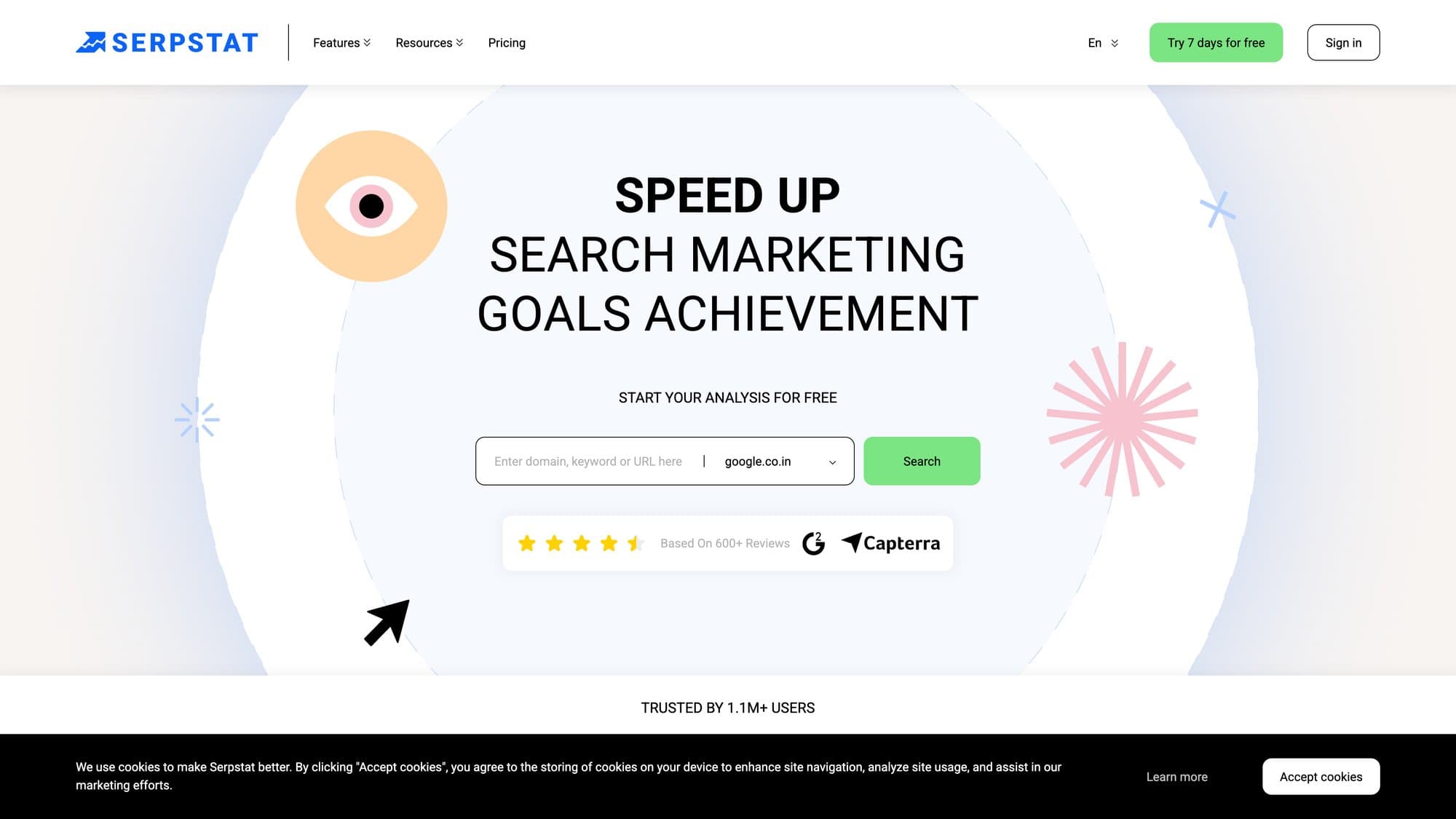
Serpstat's Individual plan gives you 5 projects, 100 searches a day, 10,000 rank-tracking checks a month, a 30,000-page site audit and backlink reports of up to 2,000 rows. Getting keyword research, competitor data, rank tracking, audits and backlinks at that price is unusual.
The tradeoffs: the interface is dense, the daily search cap on Individual is tight if you research all day, and API access and AI tools start on Team. Serpstat also sells a separate LLM Brand Monitor for AI visibility.
Pick it if you need every core module and your budget stops well below $100.
3. Ahrefs: a peer, not a discount
Price: Starter $29/month, Lite $129/month ($1,290/year). No free trial; Ahrefs Free covers sites you own.
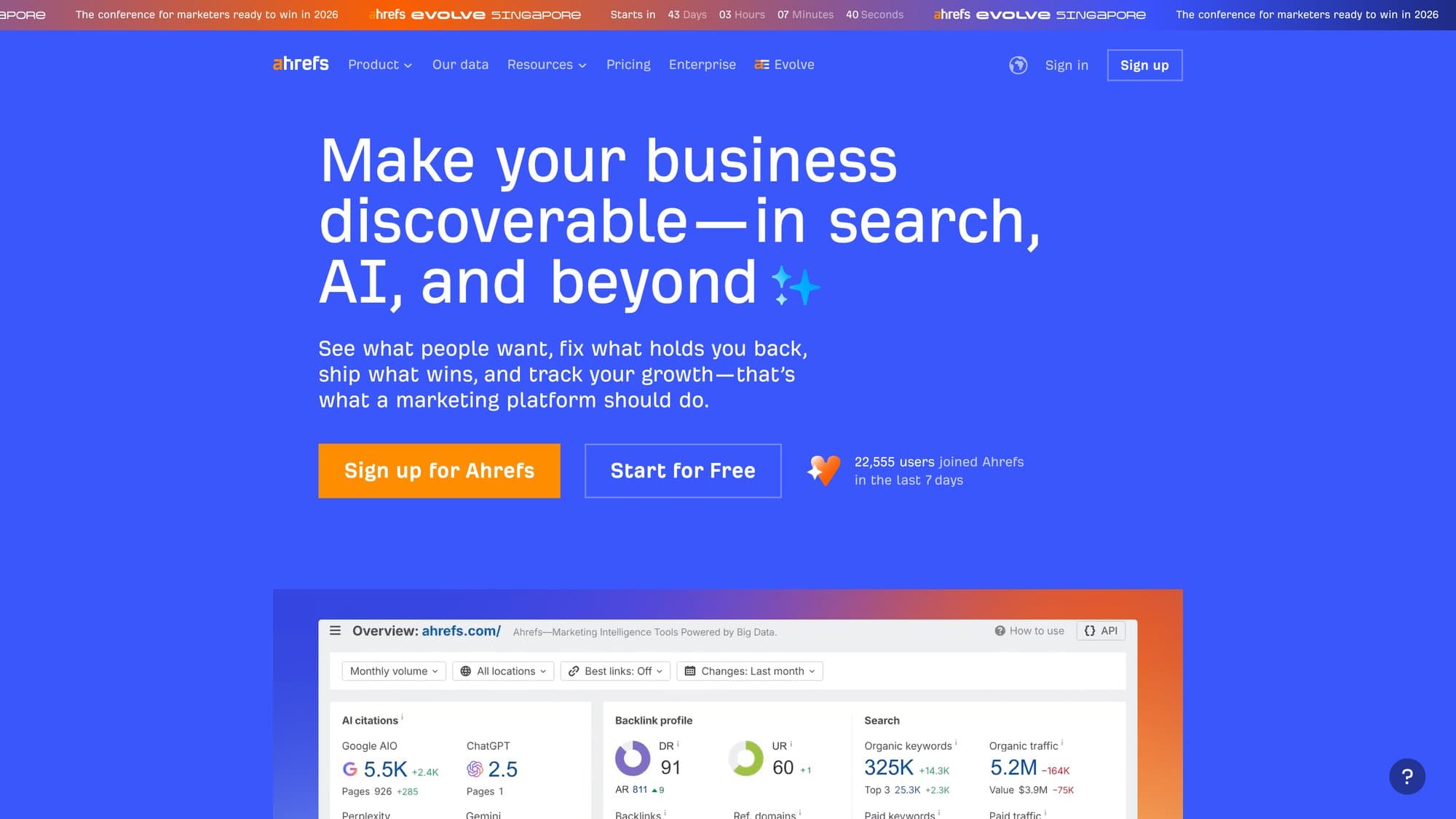
Ahrefs is Semrush's direct competitor, not a budget pick. Lite costs $129 a month for 5 unverified projects, 750 tracked keywords (updated weekly), six months of history and 1,000 credits per user. That saves you about $11 a month against Semrush's SEO plan, with fewer tracked keywords.
The reason to switch is data, not price. Ahrefs runs what it calls the second most active crawler on the web, and its Site Explorer is the tool many link builders trust most. The $29 Starter plan is a cheap way to get Keywords Explorer and competitor lookups without the rest. Our Ahrefs alternatives guide covers the other direction, and Semrush vs Ahrefs for keyword research compares the two research tools head to head.
Pick it if backlink research is the main reason you pay for Semrush.
4. Moz Pro: cheaper entry, strongest on link metrics
Price: Starter $49/month (one site), Standard $99/month or $79/month billed annually (first-year price).
Moz Pro Standard covers 3 tracked sites, 300 tracked keywords, 400,000 crawled pages a month and 150 tracked AI prompts across GPT, Gemini, Google AI Mode and Perplexity. Moz owns Domain Authority, still the most quoted third-party authority score, and its Link Explorer is solid for link prospecting.
It is lighter than Semrush on keyword volume per query (150 keyword queries a month on Standard) and on competitive traffic data. If you are choosing between Moz and Ahrefs specifically, we compared Moz DA and Ahrefs DR in detail.
Pick it if you mostly need authority metrics, link research and light rank tracking.
5. SpyFu: competitor and PPC research for $39
Price: Basic $39/month, or about $29/month billed annually. Pro + AI $119/month. 30-day money-back guarantee.
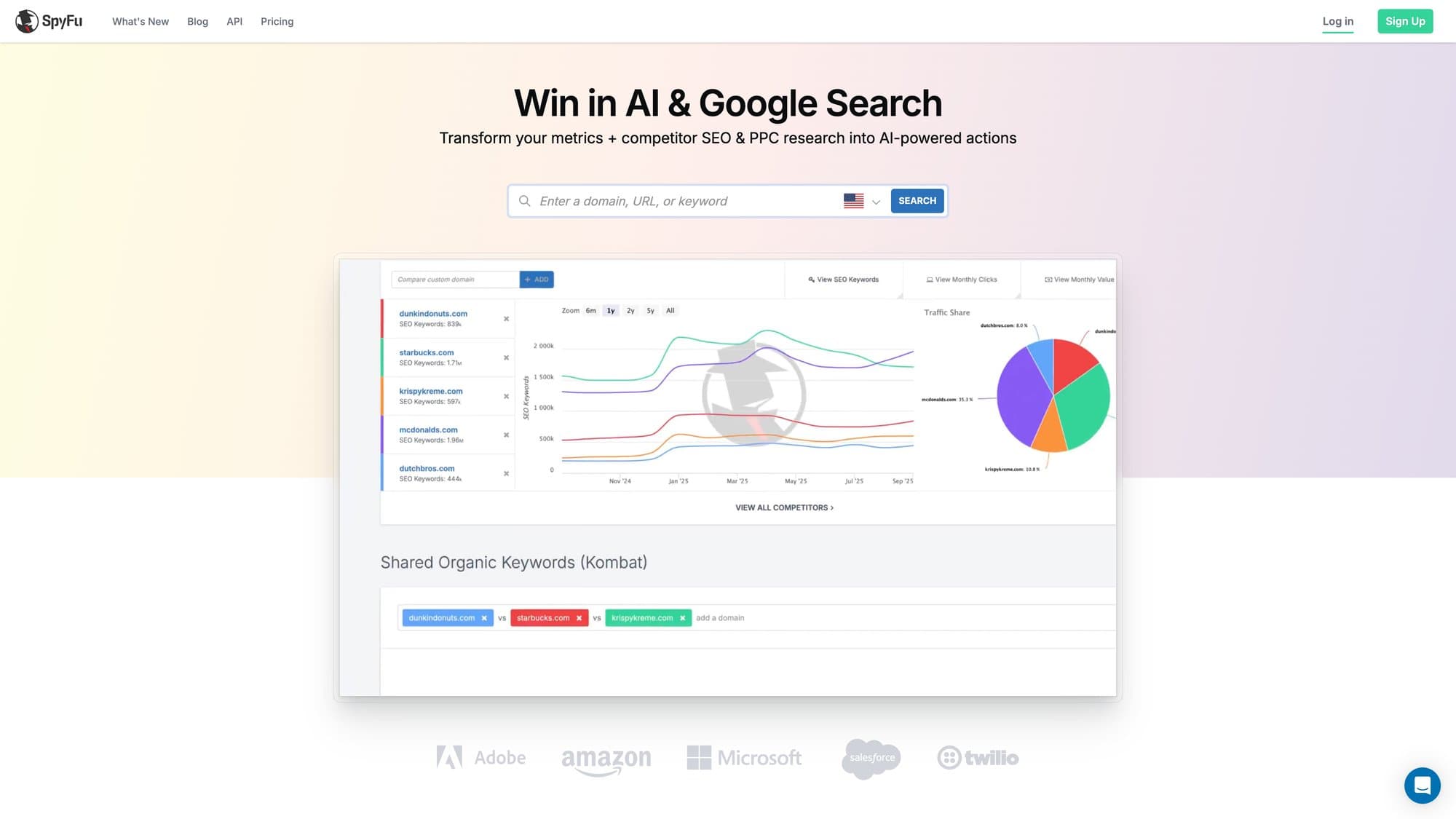
SpyFu does the job Semrush first became famous for: showing which keywords competitors rank and bid on, with more than ten years of history. Basic includes 10,000-row search results and exports, 5,000 weekly tracked rankings and, new in 2026, a site audit with 50,000 crawled pages a month. Older comparison posts that say SpyFu has no audit are out of date.
Pick it if most of your Semrush time is spent in competitor keyword and Google Ads research.
6. Mangools: the friendliest keyword research
Price: Basic $49/month, or $29.90/month billed annually. An Entry plan starts at $19.90/month billed annually. Free account with 5 lookups a day.
Mangools bundles KWFinder (keyword research), SERPChecker, SERPWatcher (rank tracking), LinkMiner and SiteProfiler. KWFinder draws on about 2.5 billion related keywords and 65,000 locations, which makes it good for local long-tail research. It is not a technical audit tool, and its link data is thinner than Ahrefs or Semrush. We compared it directly in Ahrefs vs KWFinder.
Pick it if keyword research is 80% of your Semrush use and you want something you can learn in an afternoon.
7. KeySearch: the cheapest tool that covers the basics
Price: Starter $24/month, Pro $48/month. Annual billing gives two months free. 7-day trial.
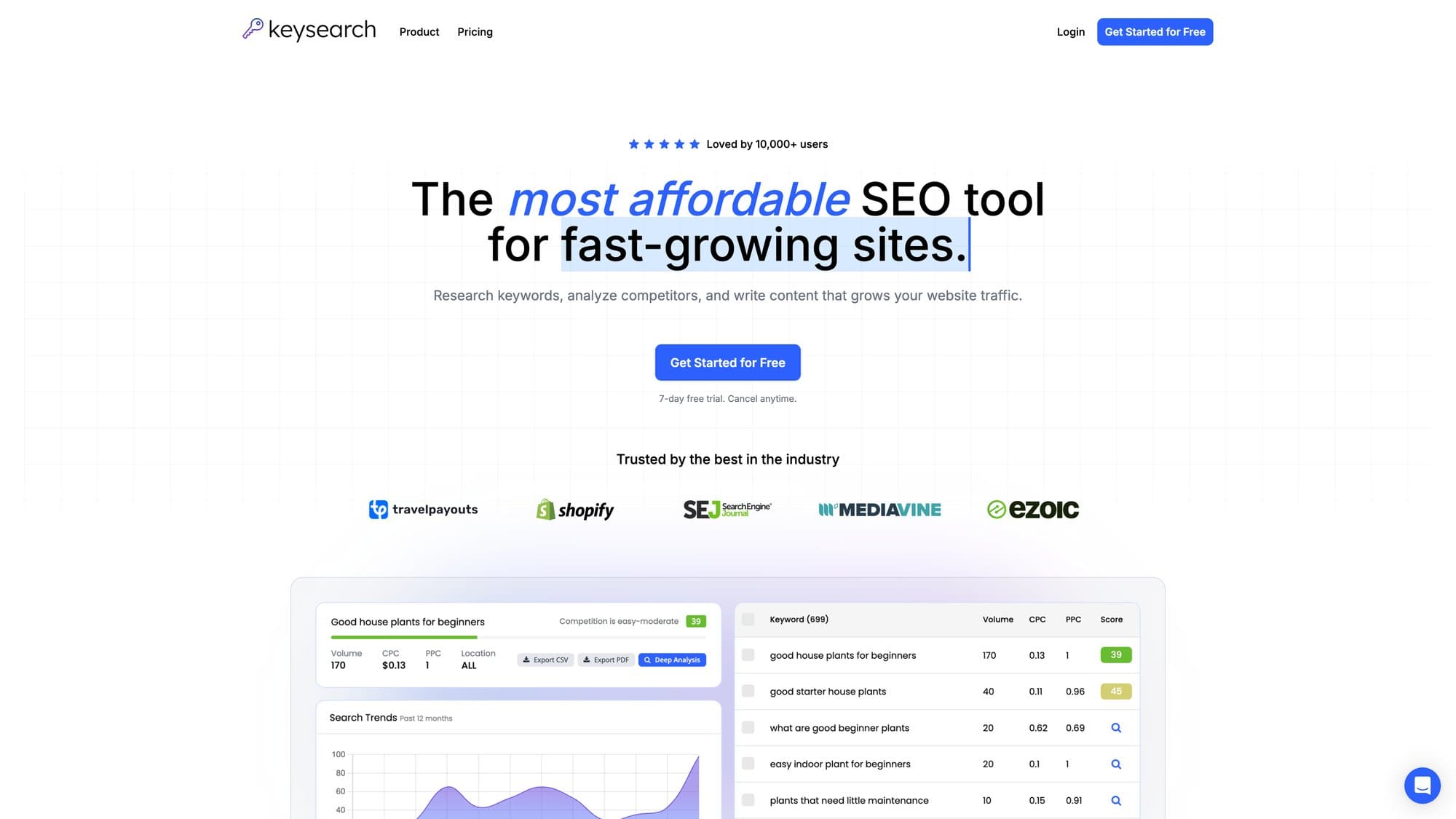
KeySearch Starter gives you 200 keyword searches a day, 80 tracked keywords and 2,000 audited pages a month, plus competitor analysis, backlink analysis, YouTube research and an AI content assistant. Pro raises that to 500 searches, 200 tracked keywords and 5,000 audited pages.
The database is smaller than Semrush's, and you won't get paid search intelligence or team workflows. For a blogger picking low-competition keywords for one site, that rarely matters.
Pick it if you run one or two content sites on a tight budget.
8. SEO PowerSuite: unlimited projects, desktop software
Price: Professional licence €349 a year (about €29 a month) in Europe; Capterra lists the same $349 in the US. Enterprise is €599 a year. Free version available.
SEO PowerSuite is four desktop apps (Rank Tracker, WebSite Auditor, SEO SpyGlass, LinkAssistant). Professional includes unlimited projects, unlimited tracked keywords, full-site crawls, unlimited backlink checks and Google AI Overview tracking. Because it runs on your computer, there are no per-project or per-keyword fees.
The limitation is the same thing: no shared cloud dashboard, and white-label reports need Enterprise. If you manage many sites on a budget, the maths is hard to beat. Agencies weighing it against cloud tools should read our SEO software for agencies roundup.
Pick it if you track dozens of sites and hate per-project pricing.
9. Seobility: budget audits and monitoring
Price: Premium €59.90/month (€575.04/year), Agency €209.90/month. Free Basic plan. 14-day trial.
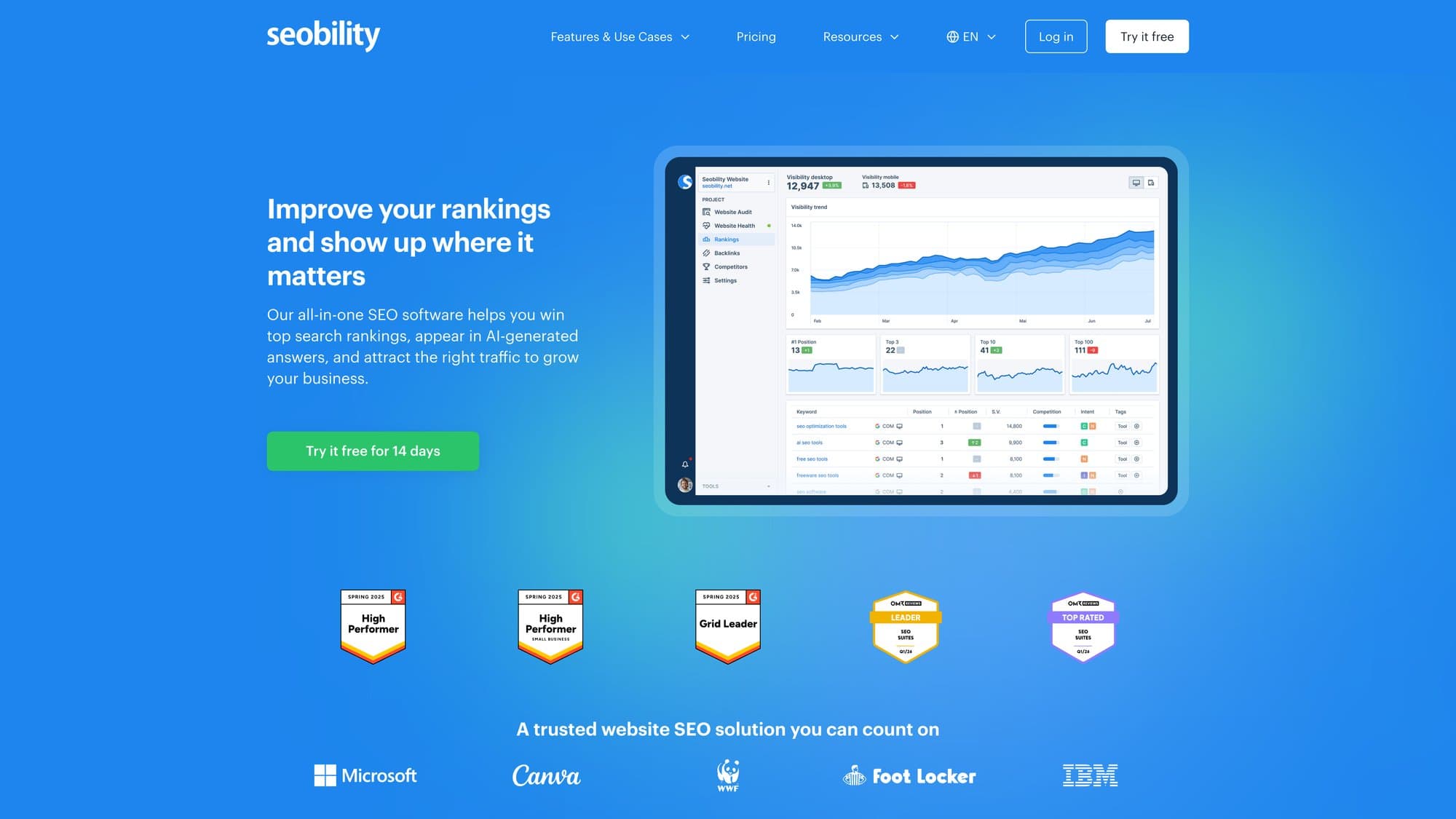
Seobility Premium crawls 25,000 pages per project across 3 projects and tracks 300 keywords. It is strongest as an always-on technical crawler, with clear issue lists you can hand to a developer. It is not a keyword or competitor research powerhouse.
Pick it if you mainly use Semrush's Site Audit and Position Tracking.
10. Outrank: for when the real job is content and links
Price: $99/month or $999/year. 3-day free trial.
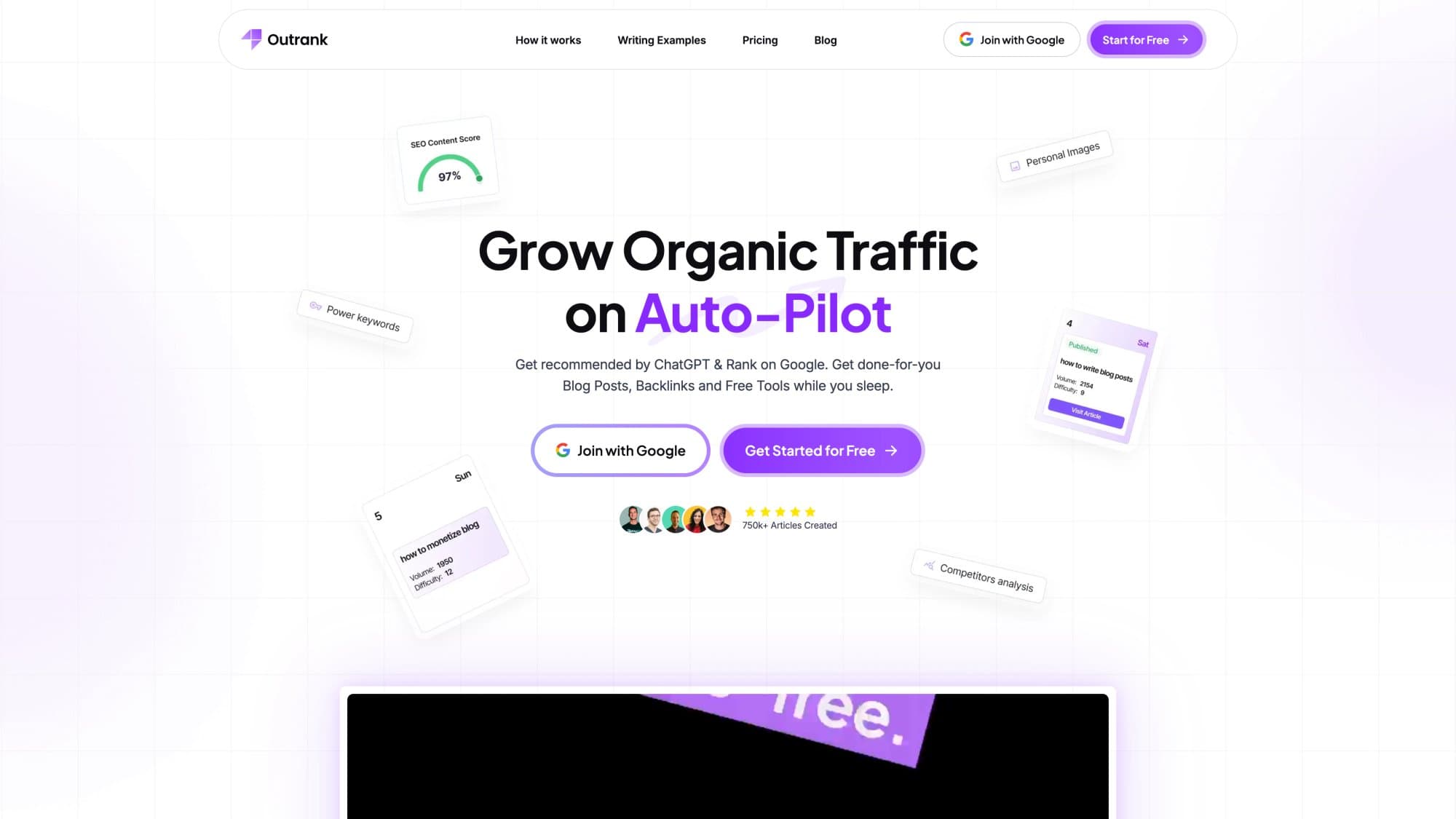
We built Outrank, so take this one with that in mind. Outrank is not a Semrush replacement for audits, rank tracking or ad research. It is the alternative for people who mostly open Semrush to find keywords for blog posts, then never find the hours to write them.
The plan includes unlimited keyword research with live volume and difficulty, 30 long-form articles a month written and published to your CMS (WordPress, Webflow, Shopify, Wix, Framer, Notion, Ghost, Next.js or a webhook), and backlinks placed inside relevant articles on other sites through our exchange, with a 15-backlinks-a-month guarantee. Across the 4,348 sites we wrote for in the last 90 days, the median target keyword had a difficulty of 14 (Outrank platform data, 90 days to October 2026). On our results page, the median site reached 2.04× its pre-Outrank Google clicks after seven months.
Pick it if your bottleneck is publishing and links, not data. Pair it with free Search Console for tracking.
Free Semrush alternatives that actually work
If your budget is zero, combine these free tools. Together they cover most of what a one-site owner uses Semrush for.
Interactive checklist
A free Semrush replacement stack
0/7
Your progress is saved in this browser, so you can come back to it later.
What the free stack can't do: show competitors' full keyword lists at scale, track hundreds of keywords daily, or report across many client sites. Once you need those, the cheapest paid step up is KeySearch or SpyFu. Our walk-throughs of tracking Google rankings for free and Bing's AI Performance report show how far the free tools go.
Which Semrush alternative should you pick?
Answer three questions and the quiz picks one tool. It weighs the job first, then budget, then how many sites you run.
3-question decision helper
Find your Semrush alternative
Question 1 of 3
What do you mainly use Semrush for?
When Semrush is still worth paying for
Semrush earns its price when you use the breadth: SEO plus Google Ads research, traffic and market analytics, local listings, content optimization and AI visibility in one login, shared with a team. Agencies that report on all of that for clients often spend less on one Semrush seat than on three narrower tools plus the time to stitch them together.
A quick test: list what you did in Semrush in the last four weeks. If it is mostly keyword research and rank tracking, any tool in the top half of this list will save you $50 to $100 a month. If it is "a bit of everything, every day", stay put and look at the annual plan instead, which takes the SEO tier from $139.95 to $117.33 a month.
FAQ
What is the best alternative to Semrush?
SE Ranking is the best all-round alternative in October 2026. Its Core plan costs $129 a month ($103.20 billed annually) and covers rank tracking for 2,000 keywords, keyword and competitor research, backlinks, site audits and AI prompt tracking. Choose Ahrefs instead if backlink data is your priority.
Is there a free alternative to Semrush?
No single free tool replaces Semrush, but a free stack covers a small site: Google Search Console for your real rankings and clicks, Bing Webmaster Tools for keyword and backlink research, Ahrefs Free for your own site's links and audits, and Semrush's free plan for 10 reports a day. Add Google Keyword Planner for search volume ranges.
What is the cheapest alternative to Semrush?
KeySearch is the cheapest tool that still covers keyword research, rank tracking, audits and backlink checks, at $24 a month. SpyFu Basic ($39, or about $29 billed annually) and Serpstat Individual ($50) are the next steps up and add deeper competitor data.
Who are Semrush's main competitors?
Semrush's closest competitors are Ahrefs, SE Ranking, Moz Pro and Serpstat for all-in-one SEO, SpyFu for competitor and PPC research, Mangools and KeySearch for budget keyword research, and Similarweb for traffic and market intelligence.
Is Ahrefs cheaper than Semrush?
Only slightly. Ahrefs Lite costs $129 a month against $139.95 for Semrush's SEO plan, about $11 less, but it tracks 750 keywords weekly versus Semrush's 500 daily. Ahrefs Starter at $29 is much cheaper, but it only covers keyword research and basic competitor lookups.
Is Semrush worth it in 2026?
Semrush is worth it if you use several of its toolkits every week, especially paid search research, traffic analytics and team reporting. If you mainly do keyword research and rank tracking for a few sites, SE Ranking, Serpstat or KeySearch do that job for 10% to 80% less.