

The best search engines other than Google are Bing (the closest like-for-like replacement), Brave Search (private, with its own index), DuckDuckGo (the easiest private default), Startpage (Google's results without Google's tracking) and Kagi (paid and ad-free). For answers instead of links, use Perplexity or ChatGPT Search. Google still sends 89.94% of search traffic worldwide, according to StatCounter's September 2026 data, so every option below is a minority choice. That's fine: each one beats Google at something specific.
Below you'll find a sortable comparison of all 12, the market share numbers behind them, a short quiz that picks one for you, and the regional engines that still beat Google in their home countries.
Key takeaways
- Google sent 89.94% of worldwide search traffic in September 2026 (StatCounter). Bing is second at 5.29%, and 14.65% on desktop.
- Private is not the same as independent: DuckDuckGo gets most of its links from Bing and Startpage shows Google results, while Brave, Mojeek and Kagi run their own indexes.
- Brave Search is the best free all-rounder. It doesn't profile users and has served every web result from its own index since 2023.
- Kagi is the best paid option at $5, $10 or $25 a month (as of October 2026). No ads, and you can block or boost any website.
- Yandex (70% in Russia) and Naver (43% in South Korea) are the only engines that still rival Google in a big market.

Search Engines Other Than Google: The Comparison Table
Most people switching away from Google want one of four things: more privacy, fewer ads and SEO junk, AI answers, or results that don't come from Google or Microsoft at all. The table shows which engine delivers which. Click a column to sort.
Google alternatives compared (October 2026)
| Google (for reference) | 89.94% | Own index | ✕ | AI Overviews and AI Mode | Free | Depth of results and local search |
| Bing | 5.29% | Own index | ✕ | Copilot Search | Free | The closest drop-in replacement |
| Yahoo | 1.36% | Bing | ✕ | Yahoo Scout (beta, US) | Free | News and finance users |
| DuckDuckGo | 0.74% | Mostly Bing, plus its own crawler | ✓ | Search Assist and Duck.ai | Free | An easy private default |
| Ecosia | 0.17% | Bing, Google, or its EU index in France | ✕ | Chat (Mistral) | Free | Funding climate projects |
| Qwant | 0.03% | Own indexing, EU index with Ecosia | ✓ | — | Free | A European engine |
| Brave Search | — | Own index | ✓ | Ask Brave | Free (ad-free Premium in Brave browser) | Best free all-rounder |
| Startpage | — | Google (anonymized) | ✓ | — | Free | Google results without Google tracking |
| Kagi | — | Own indexes plus many providers | ✓ | Kagi Assistant | $5, $10 or $25/month | Ad-free search you can tune |
| Perplexity | — | Live web search with citations | ✕ | The whole product | Free and paid plans | Research questions |
| ChatGPT Search | — | Search partners | ✕ | The whole product | Free and paid plans | Searching inside a conversation |
| Mojeek | — | Own index (9B+ pages) | ✓ | None by design | Free | Fully independent results |
| Swisscows | — | Own index and partners | ✕ | — | Free, or Pro at CHF 3.50/month | Family-safe search |
Click a column header to sort.
Is There a Search Engine Better Than Google?
For sheer coverage, no: Google still has the deepest index, the best local and maps results, and the freshest news. But "better" depends on the job. Several engines beat Google at something specific:
- Better for privacy: DuckDuckGo, Startpage and Brave Search don't build a profile of you.
- Better for fewer ads and less SEO spam: Kagi shows no ads and down-ranks pages full of ads and trackers, per Kagi's documentation.
- Better for independence: Brave Search and Mojeek answer from their own crawlers and indexes.
- Better for research questions: Perplexity and ChatGPT Search read several pages and write a cited answer.
You can also search better with Google. Add &udm=14 to a Google results URL to get the plain "Web" view without an AI Overview, use operators like site:reddit.com or "exact phrase", and use -word to exclude terms. Our guide to the Search Google or type a URL box shows how to save that as a browser shortcut.
How Much of Search Does Google Really Have?
About nine in ten searches, and that share has barely moved in a decade. StatCounter put Google at 90.61% in 2015 and 89.91% in 2025. The real story is where Google is weaker: on desktop computers, and in the US.
Worldwide search engine market share, 2015 to 2026
Hover or tap the chart for exact values.
Three numbers worth remembering from StatCounter for September 2026:
- On desktop, Bing has 14.65% worldwide, almost three times its overall share, because it's the default in Windows and Edge.
- On mobile, Google has 95.68%. Phones are where Google's lead is close to total.
- In the US, Bing has 9.91% and Google 85.19% (US data). Bing hit 10.48% in February 2026.
Defaults explain most of this. In August 2024 a US federal judge ruled that Google illegally maintained a monopoly in general search, and the September 2025 remedies barred Google from exclusive search deals and ordered it to share some index and user-interaction data with rivals. Both sides have appealed (case summary). Whether that changes the chart above is the big open question for the next few years.
Private vs Independent Search Engines: The Difference That Matters
A private search engine doesn't track you. An independent search engine has its own index. They are not the same thing.
Startpage protects your identity but shows you Google's results. DuckDuckGo runs its own crawler (DuckDuckBot) but says its traditional links and images come largely from Bing. Both solve a privacy problem. Neither gets you out from under Google's or Microsoft's ranking.
Brave Search, Mojeek and Kagi build their own indexes, so their results genuinely differ from Google's. If what bothers you is two companies deciding what the web looks like, pick from that group.
1. Brave Search: Best Free All-Rounder
Best for: people who want privacy, independent results and modern features in one free engine.
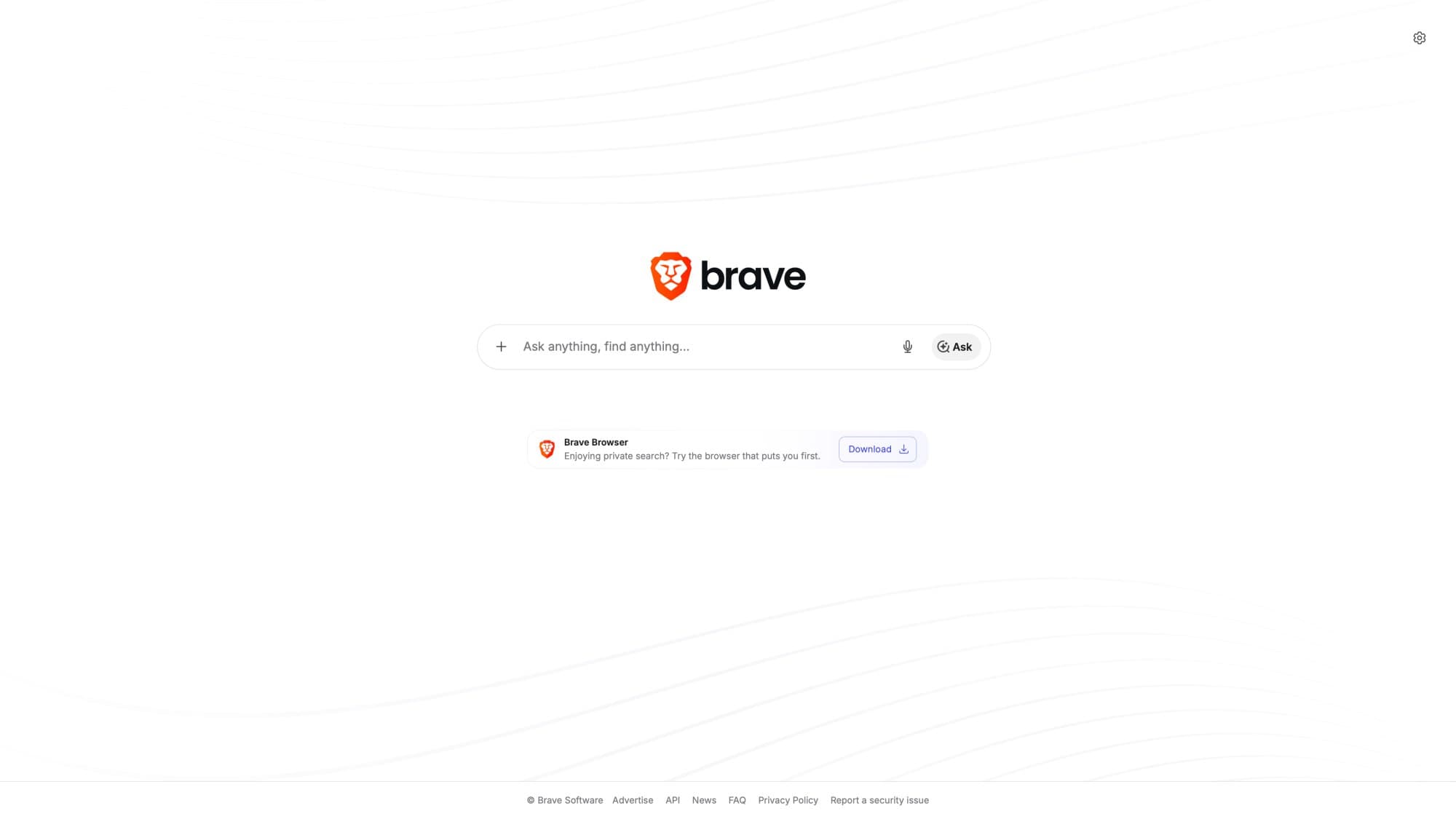
Brave Search is the most complete alternative right now. Brave says it doesn't profile you, and since April 2023 every web result comes from its own index after it dropped the Bing results that once filled about 7% of queries.
What it adds on top:
- Ask Brave combines AI chat with a normal results page, so you get a summary and the links.
- Goggles (beta) let you apply rules that re-rank results, for example boosting independent blogs or hiding certain sites.
- Brave Search Premium removes ads, but it's only available inside the Brave browser.
The trade-off is familiarity. When Brave went fully independent in 2023, it said image and video results did not yet come from its own index, and the interface takes a day to get used to.
2. Microsoft Bing: The Closest Like-for-Like Replacement
Best for: people who want something that looks and works like Google.
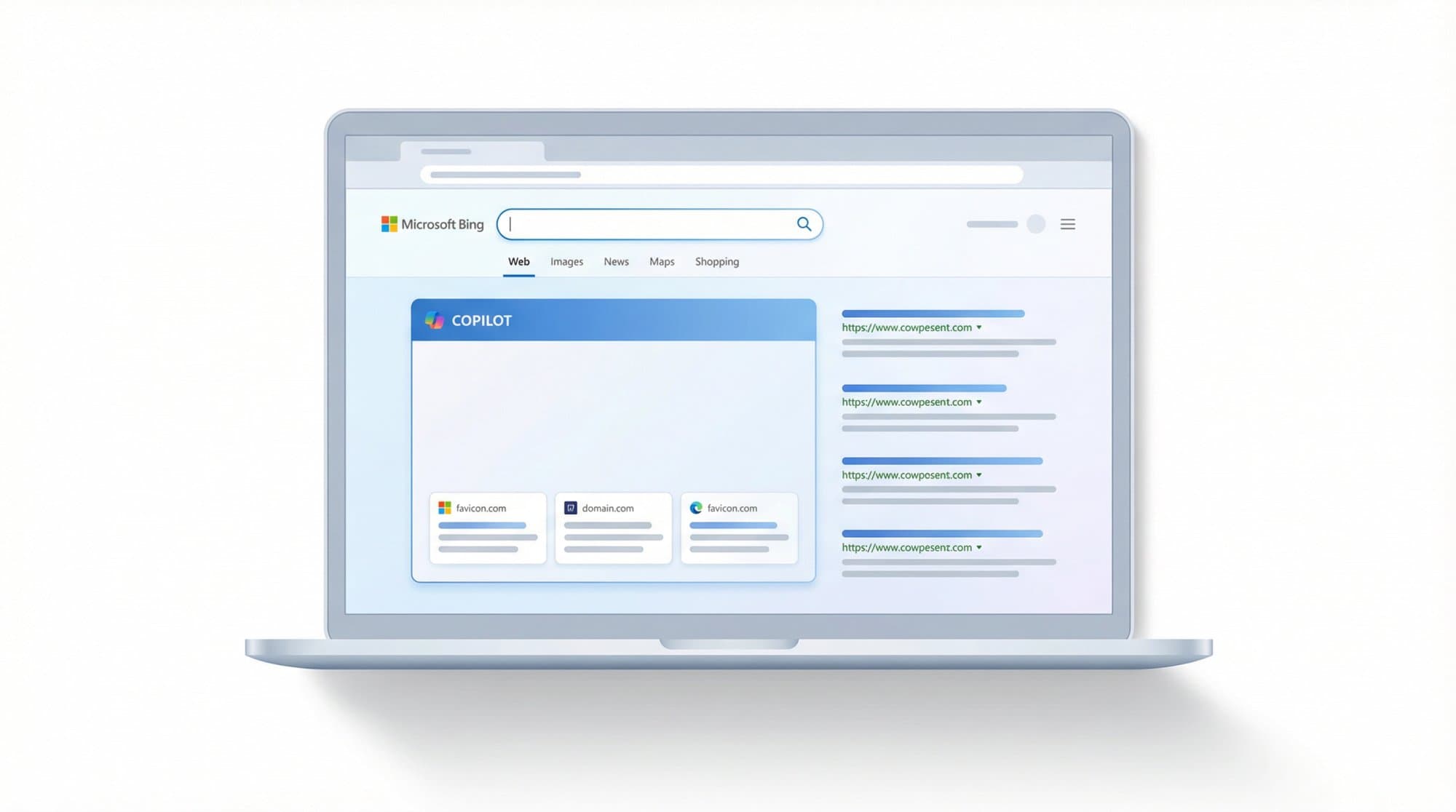
Bing is the only other Western engine with a full-scale index, tabs for images, news, shopping and maps, and a huge advertiser base. Copilot Search writes summarized answers with cited sources. It's free, and Microsoft Rewards gives you points for searching if you sign in.
It also powers a lot of the web you don't see: Yahoo's results come from Bing, DuckDuckGo leans on it heavily, and Yahoo's new Scout assistant uses Bing's grounding API. With 14.65% of desktop search traffic worldwide, it's also the engine marketers most often forget.
The catch is privacy. Microsoft says Bing uses your search history to personalize results, and signed-in searches show up in your Microsoft privacy dashboard. Bing fixes "I want a different Google". It doesn't fix "I don't want to be tracked".
3. DuckDuckGo: The Easiest Private Default
Best for: anyone who wants private search with zero learning curve.
DuckDuckGo's privacy policy says it doesn't save or share your search, chat or browsing history. It sends 0.74% of worldwide search traffic and 1.75% in the US, the largest share of any privacy-first engine StatCounter tracks.
The feature regulars love is !Bangs: type !w einstein to search Wikipedia or !a headphones to search Amazon straight from the box. AI is there if you want it: Search Assist writes short answers on the results page, and Duck.ai is a separate private chatbot.
The nuance: DuckDuckGo says its traditional links and images come largely from Bing. Excellent for privacy, not an escape from Big Tech's index.
4. Kagi: Best Paid Search Engine
Best for: heavy searchers who are tired of ads and SEO spam, and will pay to get rid of them.
Kagi charges for search instead of selling ads. Its plans as of October 2026:
| Plan | Price | Searches |
|---|---|---|
| Trial | Free | 100 searches total |
| Starter | $5/month | 300 a month |
| Professional | $10/month | Unlimited |
| Ultimate | $25/month | Unlimited, plus premium AI models in Kagi Assistant |
Kagi combines its own web index (Teclis) and news index (TinyGem) with anonymized calls to other search providers, and it down-ranks pages full of ads and trackers. You can block, lower, raise or pin any website, and Lenses narrow results to forums, academic sources, PDFs or the "small web".
If "free" search costs you ten minutes a day wading through junk, $10 a month is cheap.
5. Startpage: Google Results Without Google Tracking
Best for: people who like Google's results but not Google's data collection.
Startpage sends your query to Google on your behalf, strips out anything that identifies you, and returns the results. It says it never records personal data or search history, removes your IP address, and shows the same unprofiled results to everyone. Its ads are non-personalized, according to its privacy policy.
The standout feature is Anonymous View: open a result through Startpage's proxy, and the destination site doesn't see your IP address. It protects the click as well as the search. Startpage is based in the Netherlands, so it falls under EU privacy law.
6. Perplexity: Best for Research Questions
Best for: questions that would normally take five tabs to answer.
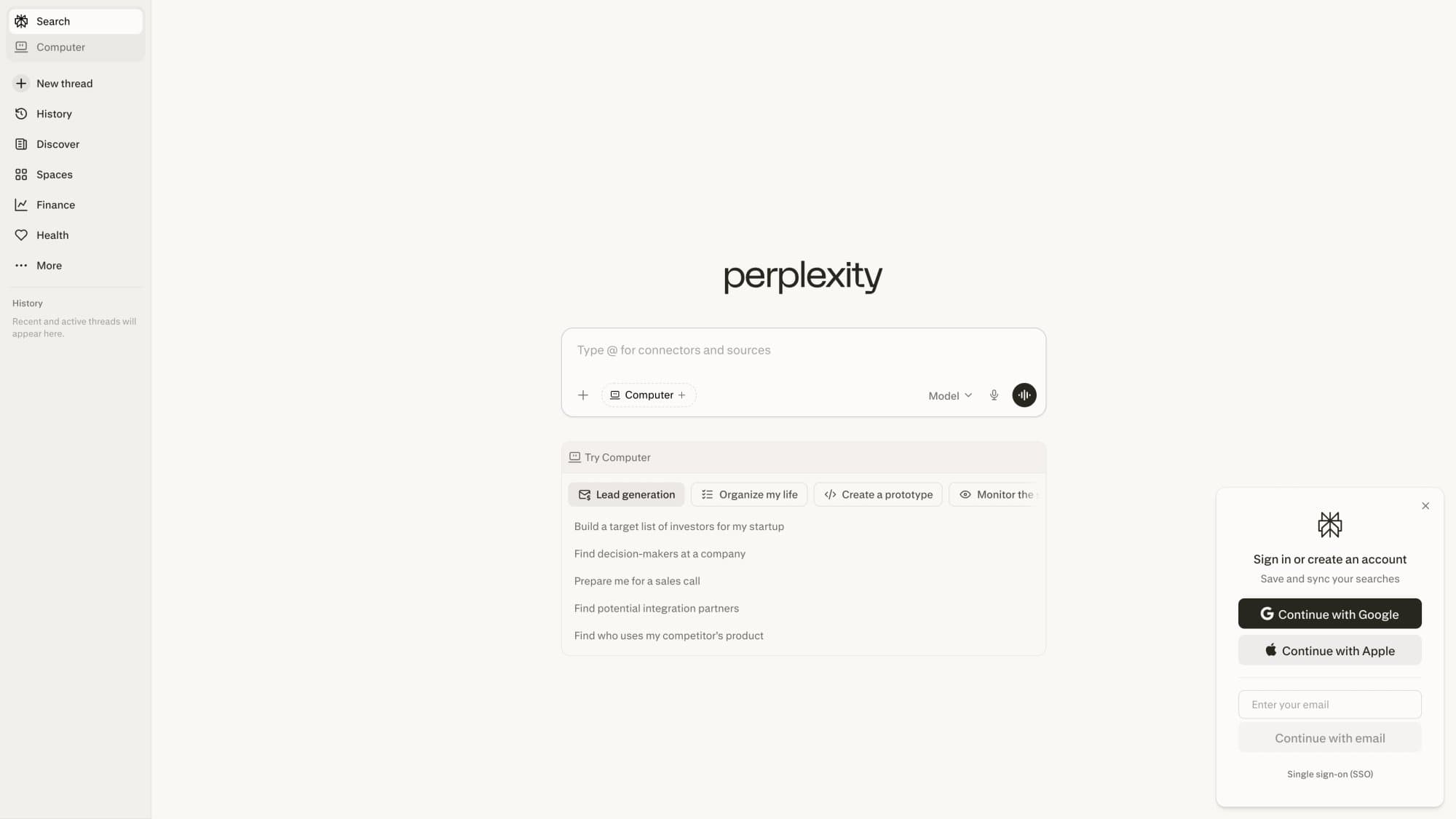
Perplexity is an answer engine: it searches the web, reads the pages and writes a conversational answer with numbered citations. The free plan includes practically unlimited basic searches and a small number of Pro Searches; paid Pro and Max plans add more advanced models and deeper research.
It's also the AI tool that sends websites the most credit. In Outrank's study of AI citations across 200 sites, Perplexity accounted for 41.6% of all citations Ahrefs recorded, against 4.8% for ChatGPT.
The trade-off: answer engines compress the web. Great for "explain the difference between X and Y", poor for browsing or discovering odd corners of the internet. Check the sources before you trust a number.
7. ChatGPT Search: Best If You Already Live in ChatGPT
Best for: people who already use ChatGPT daily and want search in the same window.
ChatGPT Search answers with links to its sources, and you can keep refining in the same conversation instead of opening new tabs. It's available on free accounts, and ChatGPT can also show product options with links to retailers for shopping questions.
The blind spot is neutrality. OpenAI's memory FAQ says ChatGPT may use saved memories and past chats to rewrite your search queries. Helpful for personalization, but it means two people asking the same question can get different answers. If you want a neutral results page, use a classic engine.
8. Ecosia: Best Mission-Driven Search Engine
Best for: people who want their searches to fund climate projects.
Ecosia uses the profits from its search ads to fund tree planting and other climate projects, and publishes how it spends them in its help center.
Its results come from three places, according to Ecosia's own page (updated August 12, 2026): Microsoft Bing for everyone, Google in some regions and browsers, and EUSP, the European search index Ecosia is building with Qwant, which is so far live only in France. Its chat feature runs on Mistral's AI models.
Ecosia is not the strictest privacy option: it uses search partners and ads to stay funded. Pick it for values, not anonymity.
9. Qwant: Best European Search Engine
Best for: European users who want an EU-based engine that doesn't personalize results.
Qwant is built in France. It says it doesn't use cookies or ad trackers to build a profile, doesn't tailor results to you, and gives access to the web through its own indexing technology. Together with Ecosia it is building EUSP, a joint European search index meant to reduce Europe's dependence on US search infrastructure.
Its market share is tiny (0.03% worldwide in September 2026), but if search sovereignty matters to you, Qwant is the project to back.
10. Mojeek: The Fully Independent Search Engine
Best for: people who want results nobody else is showing them.
Mojeek is a UK search engine with its own crawler (MojeekBot), its own index of more than 9 billion pages (a milestone it passed in 2025) and its own ranking. It doesn't track users and has run without tracking since its early days.
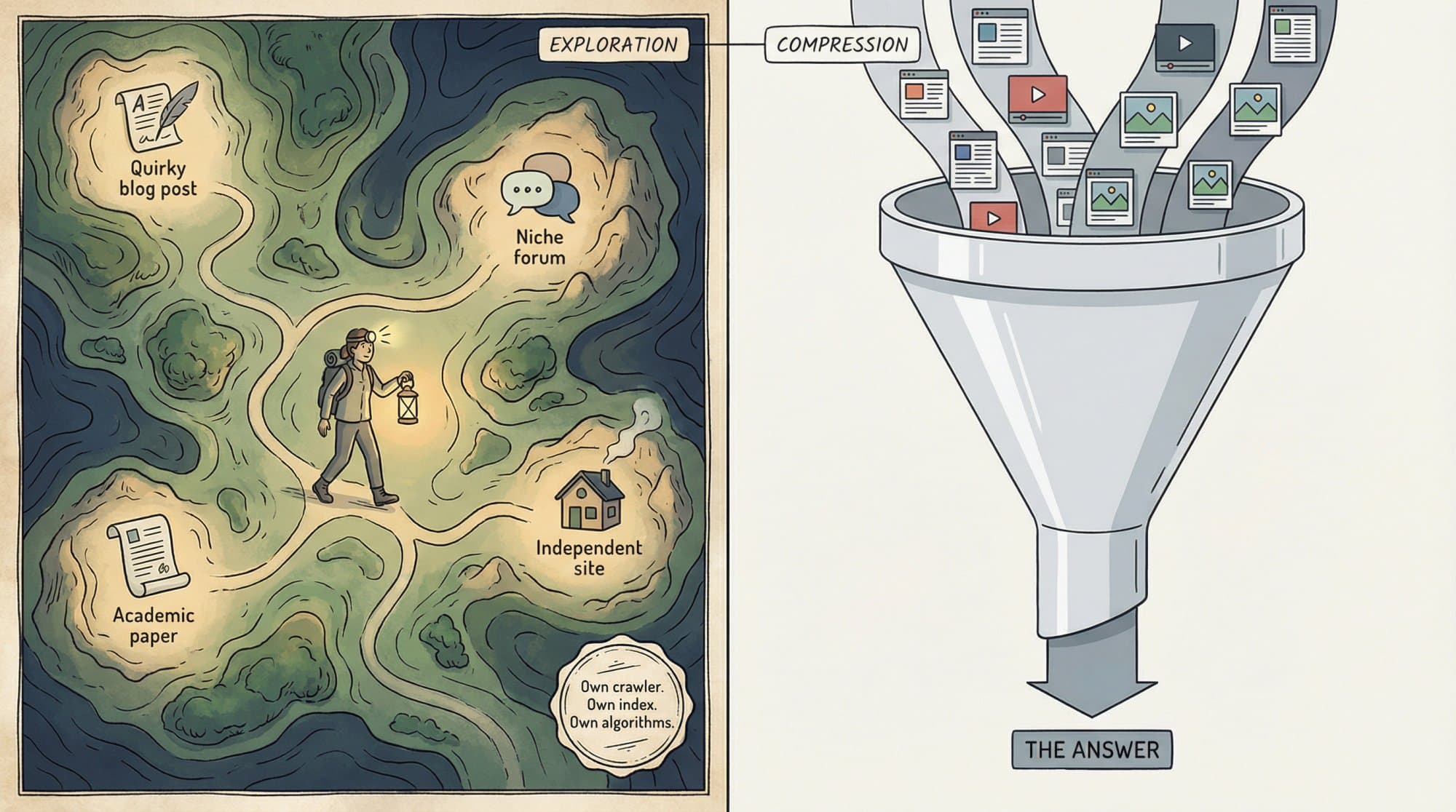
Mojeek has also made a point of not becoming an answer engine: it treats search as exploration, not compression. Results are less polished than Google's for popular queries, but for niche topics you'll often find pages Google buries.
11. Yahoo Search and Yahoo Scout: The New AI Answer Engine
Best for: Yahoo News, Finance and Mail users curious about AI search.
Yahoo Search results come from Bing, and Yahoo still holds 1.36% of worldwide search traffic, more than DuckDuckGo. The news is Yahoo Scout, launched in beta on January 27, 2026: an AI answer engine for Yahoo's nearly 250 million US users that blends the open web with Yahoo's own data. Yahoo says Anthropic's Claude is its main AI model, with Microsoft Bing's grounding API supplying web sources.
It's US-only for now. Try it if you already live in Yahoo's apps.
12. Swisscows: Family-Friendly Search
Best for: families who want filtered, child-safe results.
Swisscows filters violent and pornographic content by default, which makes it a sensible default on a kids' computer. Be aware of one 2026 change: Swisscows says its free version is no longer fully anonymous, because Microsoft Bing stopped allowing privacy-safe ads starting in 2026. The fully private option is now Swisscows Pro at CHF 3.50 a month.
Regional Search Engines That Still Beat Google at Home
Outside the US and Europe, a few local engines hold real market share, which matters if you sell in those countries:
Where a local search engine rivals Google (September 2026)
Yandex in Russia (Google 28.1%)
70.35%
Baidu in China (Bing 21.61%)
46.85%
Naver in South Korea (Google 47.97%)
43.05%
Seznam in Czechia (Google 78.77%)
14.96%
Yandex dominates Russia, Baidu leads China (where Google is blocked), Naver runs neck and neck with Google in South Korea, and Seznam keeps a loyal share in the Czech Republic. If your customers are in one of these markets, you need to rank there too. Our guide to SEO localization covers the basics.
Small search engines worth a look
Beyond Mojeek, the "small web" has a few independent projects. Marginalia Search is an open-source engine from Sweden built to surface personal websites and blogs that big engines rarely show. Kagi even uses it as one of its sources. None of these will replace Google for everyday searches, but they're great for discovery.
Which Search Engine Should You Use?
Answer four questions and get a recommendation:
4-question decision helper
Which Google alternative fits you?
Question 1 of 4
Why are you leaving Google?
Most people end up with two tools: one classic engine for everyday lookups (Brave, DuckDuckGo, Startpage or Bing) and one answer engine for research (Perplexity or ChatGPT Search). Expecting one product to be best at local search, privacy, shopping and deep research is how people end up back on Google.
How to Test Google Alternatives in 15 Minutes
Don't test with demo queries. Test with your real life.

Run the same five searches in three engines:
- A navigational search: a specific site or page you use often.
- A local search: a restaurant, a plumber, opening hours near you.
- A buying search: comparing two products you're actually considering.
- A niche search: something only your job or hobby cares about.
- A news search: something that happened this week.
Then ask which engine gave the best first result, which felt least cluttered, and which privacy trade-off you can live with. Set the winner as your default (our address bar guide has the settings path for every browser) and give it a week before deciding.
What Google Alternatives Mean for Website Owners
If you run a website, the engines on this page are extra doors into your site, and some of them are growing faster than Google.
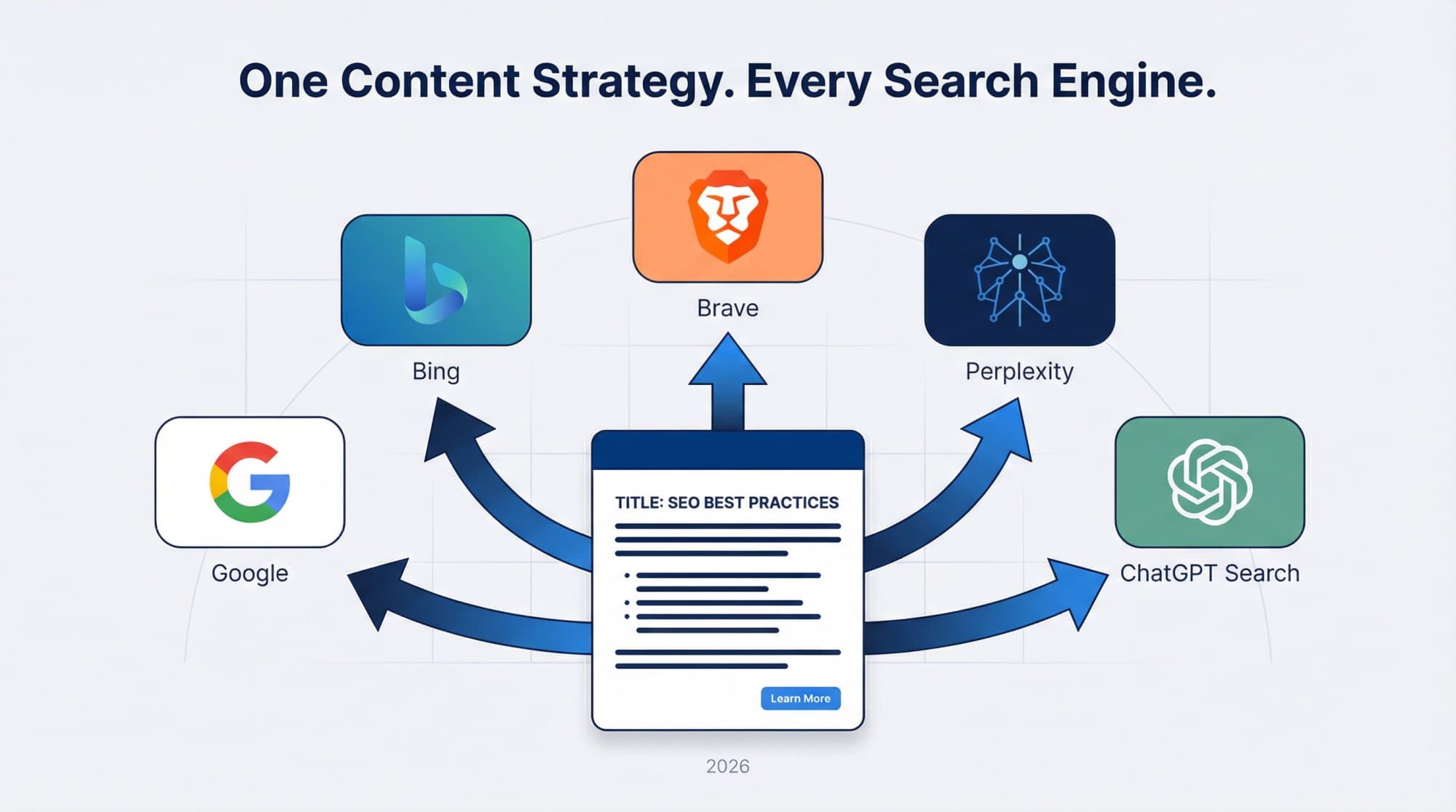
Three practical consequences:
- Bing matters more than its 5% suggests. It has 14.65% of desktop search traffic, it feeds Yahoo and DuckDuckGo, and Microsoft Copilot answers from it. Copilot produced 18.8% of the AI citations in our 200-site AI citation study. Verify your site in Bing Webmaster Tools, whose AI performance report shows which pages Copilot cites.
- AI answer engines quote pages that answer directly. The same study found Google impressions were the strongest predictor of AI citations (Spearman 0.80), so ranking well in classic search is still the way into AI answers. If ChatGPT ignores you, start with why ChatGPT skips your site. To see which pages ChatGPT, Perplexity, Gemini and Claude quote for a question in your niche, run it through our free AI Citation Analyzer.
- Independent indexes need to crawl you. Don't block Bingbot, Brave's crawler or MojeekBot in robots.txt unless you mean it, and keep your site fast and technically clean.
The common thread: engines reward sites that cover a topic in depth and answer questions clearly, which is how topical authority gets built. That's the part Outrank automates: it finds the keywords your site can win, publishes an SEO article to your CMS every day, builds backlinks through its exchange, and tracks whether ChatGPT, Perplexity, Gemini, Copilot and Google's AI features mention you.
FAQ
What is the best search engine other than Google?
For most people, Brave Search: it's free, doesn't profile you and runs its own index. Pick Bing if you want the most Google-like experience, DuckDuckGo for the easiest private default, Startpage for Google's results without tracking, or Kagi if you'll pay for ad-free results.
Is there a search engine better than Google?
Not for overall coverage, local results and freshness, where Google still leads. But several engines are better at specific jobs: DuckDuckGo and Startpage for privacy, Kagi for ad-free results you can tune, Brave and Mojeek for independent results, and Perplexity for research answers with citations.
What search engines are not owned by Google?
Bing (Microsoft), Yahoo (powered by Bing), DuckDuckGo, Brave Search, Ecosia, Qwant, Kagi, Mojeek, Swisscows, Perplexity and ChatGPT Search are all independent of Google. Startpage isn't owned by Google but shows Google's results, and Ecosia uses Google results in some regions.
Which search engine is the most private?
DuckDuckGo, Startpage and Brave Search are the strongest free options: none of them build a profile of you, and Startpage adds Anonymous View for private clicks. Swisscows' free version is no longer fully anonymous as of 2026; its paid Pro plan is.
Which search engines have their own index?
Google, Bing, Brave Search, Mojeek and Yandex run full indexes of their own. Kagi has its own web and news indexes but also queries other providers, Qwant uses its own indexing technology, and Ecosia and Qwant are building a shared European index. DuckDuckGo and Startpage mainly rely on Bing and Google.
What is Google's market share in 2026?
Google sent 89.94% of worldwide search traffic in September 2026, according to StatCounter, followed by Bing at 5.29%, Yahoo at 1.36% and Yandex at 1.31%. On mobile Google's share is 95.68%; on desktop it's 78.09%.
Are AI chatbots replacing search engines?
Not yet. ChatGPT and Perplexity are excellent for synthesis and follow-up questions, but they aren't counted in search engine market share and still depend on web search underneath. Most people now use both: a search engine for finding and browsing, an AI tool for explaining.