To buy ad space, pick the channel where your audience already spends time, then buy it one of three ways: self-serve in an ad platform (Google Ads, Meta, LinkedIn), programmatically through a demand-side platform that reaches thousands of sites and streaming apps, or directly from a publisher, newsletter or channel. Start with a small test, and judge every placement by what it costs per click and per customer, not by its CPM.
Below: the steps, where to buy each type of ad space (including websites, newsletters, and FAST and VOD streaming), sourced price benchmarks, a calculator to compare quotes, and the checks that stop you paying for bots.
Key takeaways
- You can buy ad space self-serve in ad platforms, programmatically through DSPs and ad networks, or directly from publishers.
- Google and Microsoft search ads averaged $5.42 per click in LocaliQ's 2026 benchmarks, a useful yardstick for any quote.
- Newsletter sponsorships on Paved averaged $1.22 to $18.47 per 1,000 subscribers depending on the category (2026 data).
- Before paying a website, check that the seller is listed in its ads.txt file and ask for placement and viewability reports.
- Compare placements on cost per click and cost per conversion. A cheap CPM can be the most expensive buy.
How to purchase ad space in six steps
- 1
Define the job
Awareness, leads or sales? Each needs different placements and different metrics. Buying cold display impressions to drive direct sales is how budgets vanish. - 2
Find where your buyers already are
Check where your current customers came from (Google Analytics → Reports → Acquisition → Traffic acquisition), which newsletters and sites they read, and what your competitors sponsor. - 3
Choose the buying route
Self-serve for search and social, a DSP or ad network for display and streaming at scale, direct deals for specific sites and newsletters. - 4
Vet the placement
Ask for audience data, past sponsor results, placement lists and viewability. On websites, confirm the seller in ads.txt. - 5
Run a small test with tracking
Tag every link with UTM parameters, set a budget you can afford to lose, and run long enough to get at least a few dozen clicks. - 6
Scale what beats your cost per result
Compare each test on cost per click and cost per conversion against your other channels, then move budget to the winners.
Where to buy ad space
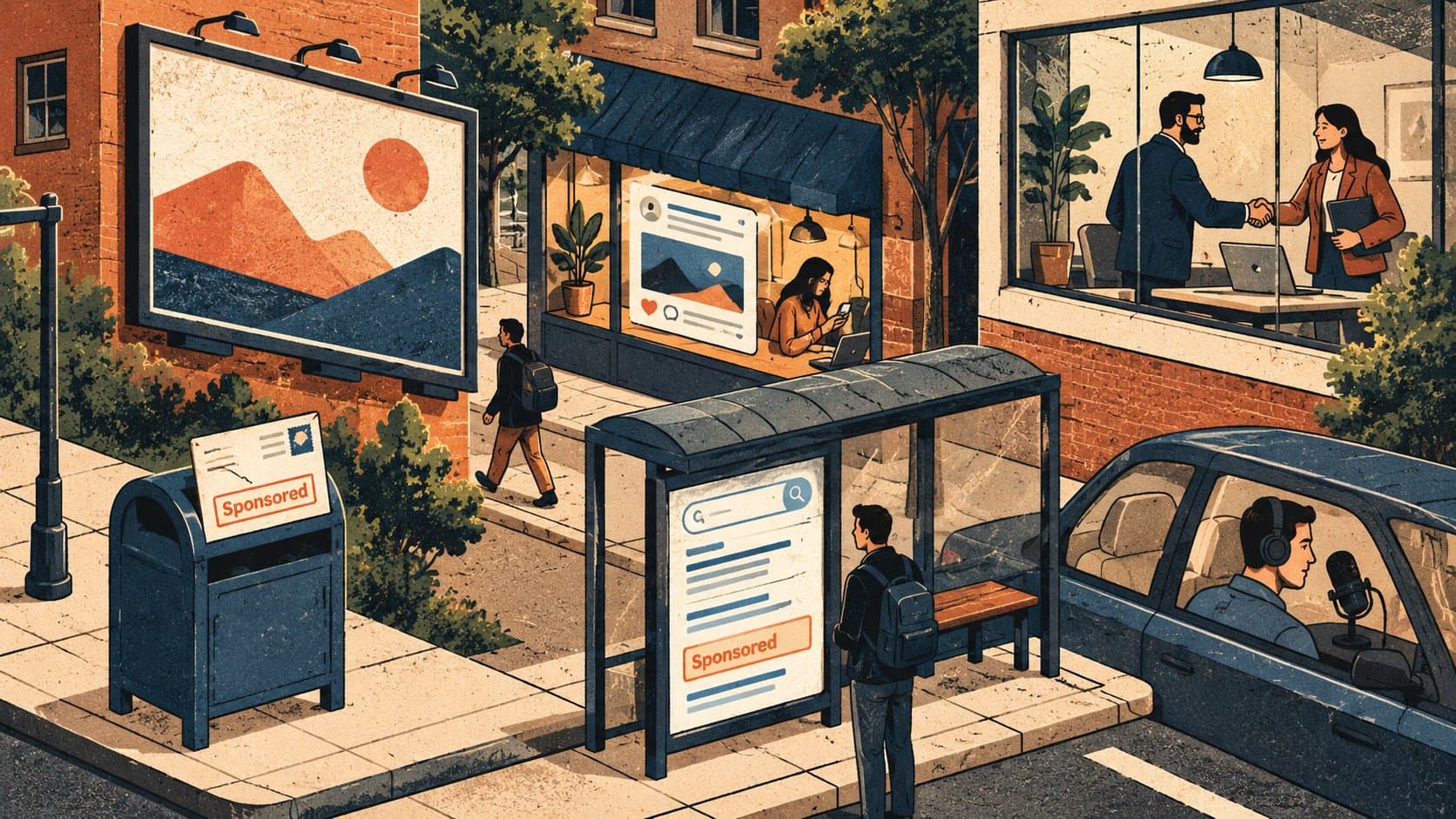
| Channel | Where to buy | Entry point | Best for |
|---|---|---|---|
| Search ads | Google Ads, Microsoft Advertising | Self-serve, no minimum spend | Capturing people already searching for what you sell |
| Social ads | Meta Ads Manager, TikTok Ads, LinkedIn Campaign Manager, Reddit Ads | Self-serve, daily budgets | Targeting by interest, demographics or job title |
| Website display | Google Ads Display campaigns, DSPs (The Trade Desk, Display & Video 360, StackAdapt), self-serve networks (Adsterra, PropellerAds) | Self-serve or managed | Reach, retargeting, brand awareness |
| Specific websites | The site's "Advertise" page or media kit, niche marketplaces such as BuySellAds and Carbon Ads | Direct deal | Owning a placement in front of a defined audience |
| Newsletters | Direct from the publisher, marketplaces such as Paved, beehiiv's ad network | Direct or marketplace | B2B and niche audiences |
| CTV, FAST and VOD | DSPs with CTV inventory, self-serve CTV platforms, platform ad sales teams | Managed or self-serve | Video reach on the TV screen |
| Podcasts | Podcast networks, host-read deals, dynamic ad insertion platforms | Direct or programmatic | Trust-heavy niches with loyal listeners |
Buying ad space on websites
You have three routes. Programmatic (Google Ads Display campaigns or a DSP) gets you reach across thousands of sites with audience targeting, but less control over where ads land, so review placement reports and exclude junk sites. Niche marketplaces such as BuySellAds and its Carbon Ads network sell fixed placements on known sites (Carbon focuses on 350+ developer and design sites). Direct deals mean emailing the site's ad contact, getting the media kit and agreeing a price per month or per 1,000 impressions in an insertion order. Our banner ad network guide compares the main display networks from both sides.
Direct buys make sense when a single site owns your audience. Ask for the page-level traffic of the pages your ad will appear on, not the sitewide total.
Buying newsletter ad space
Newsletter slots are sold per send, usually as a flat fee. On the Paved marketplace, average prices ranged from about $1.22 per 1,000 subscribers for lifestyle lists to $18.47 for HR newsletters, based on twelve months of campaigns (Paved's 2026 benchmarks via PPC Land). Niche business audiences cost more per reader because they are hard to reach anywhere else. Our blog advertising rates guide has the full category table.

Open rates are a weak signal since Apple Mail Privacy Protection started preloading images in 2021, which inflates opens. Ask for unique clicks per send on recent sponsor placements instead, and whether the slot is the primary (top) or a secondary placement.
Buying FAST, VOD and CTV ad space
FAST stands for free ad-supported streaming TV: channels on services like Pluto TV (Paramount), Tubi (Fox), The Roku Channel and Samsung TV Plus. VOD (video on demand) and CTV (connected TV) ads run inside streaming apps on TV screens. Most of this inventory is bought programmatically through DSPs with CTV supply, such as The Trade Desk, Display & Video 360 and Amazon DSP, or through self-serve CTV platforms that package it for smaller budgets. Larger buyers can also go direct to the platforms' ad sales teams. Pricing is CPM-based, and you'll need a video creative that works without a click, since nobody clicks a TV.
Search and social ad space
These are the default because they are self-serve, measurable and fast to launch. They are also the most competitive auctions. For a sense of scale, Google and Microsoft search ads averaged $5.42 per click, a 6.64% click-through rate and an 8.18% conversion rate across industries in LocaliQ's 2026 benchmarks. Search is still the most intent-rich channel, though AI Overviews have cut clicks on informational queries; our explainer on digital ad space covers that shift.
Is this ad placement a good deal?
A quote only means something once you convert it into cost per click and cost per customer. Plug in any offer:
Interactive calculator
Turn an ad quote into cost per click and per customer
Effective cost per click
$2.50
- Effective CPM
- $25.00
- Expected clicks
- 200
- Cost per conversion
- $125
- Cost per click vs Google search average ($5.42)
- 0.5×
A $500 newsletter slot at 20,000 opens looks like a $25 CPM. At a 1% click rate that is $2.50 per click, cheaper than an average search click; at 0.2% it is $12.50. The click rate decides whether a placement is cheap, which is why you should ask for past sponsors' click numbers before you buy.
How to vet a placement before you pay

- Authorized seller. For website inventory, open
example.com/ads.txtand confirm the seller or network you're buying from is listed. The ads.txt standard from IAB Tech Lab exists to stop resellers selling space they don't own. - Real audience. Ask for a screenshot of analytics or Search Console for the pages your ad will sit on, plus the audience's country split.
- Past results. Ask for clicks and outcomes from two or three recent sponsors, or contact one.
- Placement and viewability. For programmatic buys, require a placement report and bid on viewable impressions where your platform allows it.
- Brand safety. Review the surrounding content and the other advertisers on the site or list.
- Disclosure. Paid placements must be labeled as ads; in the US the FTC's endorsement guides apply to sponsored content, and Google asks for paid links to carry
rel="sponsored"under its link spam policy.
If you're really buying links, not impressions
Many "sponsored post" purchases are SEO link buys in disguise. That is a different purchase with different risks: Google's spam policies treat paid links that pass ranking credit as link schemes. If your goal is authority rather than ad impressions, a link program is the more honest tool. Outrank's backlink exchange places links inside relevant articles on other sites in its network, with no exact-match anchors and a guarantee of 15 verified backlinks a month. Our guide to the best place to buy backlinks compares the options and their risks.
Measure every buy the same way
- Tag every link with UTM parameters (source, medium, campaign) so the traffic shows up separately in your analytics.
- Track the conversion you care about, not just the click: sign-ups, demo requests, purchases.
- Compare on cost per result across channels, including search and social.
- Account for the lag. Sponsorships and video often drive branded searches later; watch branded search impressions in Search Console during and after a campaign.
Paid ad space rents attention
Every placement in this guide stops working the day you stop paying. That's fine for launches and tests, but it means next month starts from zero.
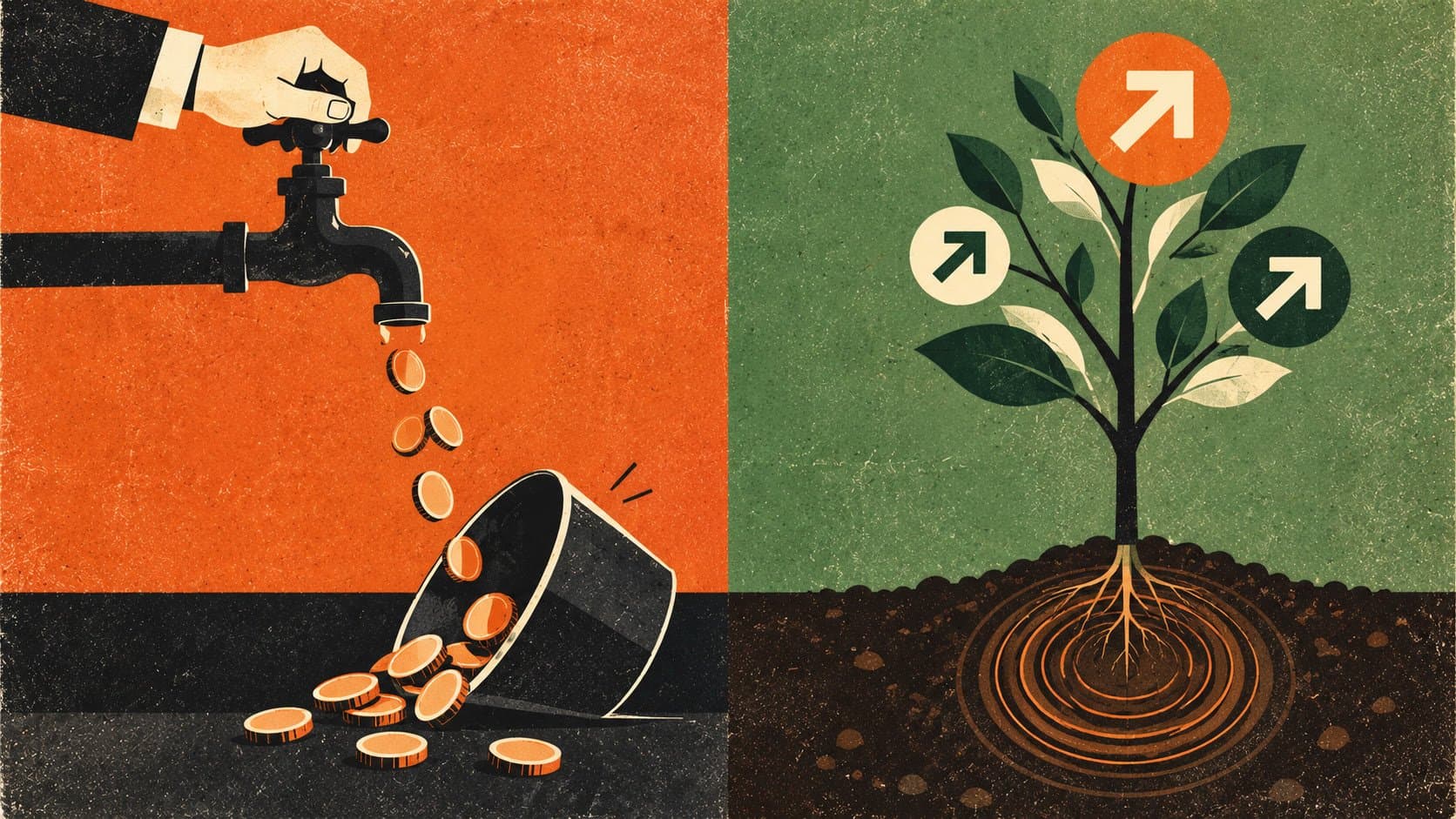
The brands that buy ad space most efficiently also own traffic: articles that rank for the questions their buyers search, so paid budgets only need to cover what organic can't. Outrank builds that base automatically, publishing an SEO article to your site every day; in our study of 2,119 sites, median Google clicks doubled by month seven. Our SEO strategy template shows how to plan it.
If you're on the other side of this market, see how to sell ad space on your website.
FAQ
How do I buy ad space?
Choose the channel your audience uses, then buy through a self-serve platform (Google Ads, Meta, LinkedIn), a programmatic DSP or ad network for display and streaming, or a direct deal with a publisher or newsletter. Start with a small, tracked test and compare placements on cost per click and cost per conversion.
How much does it cost to buy ad space?
It depends on the channel. Google and Microsoft search ads averaged $5.42 per click in LocaliQ's 2026 benchmarks. Newsletter sponsorships on Paved averaged between $1.22 and $18.47 per 1,000 subscribers depending on the category. Display, video and CTV are priced per 1,000 impressions and vary widely with targeting and season.
How do I buy ad space on websites?
Use Google Ads Display campaigns or a DSP for reach across many sites, a marketplace such as BuySellAds for fixed placements on known sites, or contact the site directly through its advertise page or media kit. For direct deals, get the terms in an insertion order and confirm the seller in the site's ads.txt file.
How do I buy FAST or VOD ad space?
FAST channels (Pluto TV, Tubi, The Roku Channel, Samsung TV Plus) and video-on-demand apps are mostly sold programmatically. Buy through a DSP with connected TV inventory, such as The Trade Desk, Display & Video 360 or Amazon DSP, through a self-serve CTV platform, or directly from the platform's ad sales team. Pricing is per 1,000 impressions.
What should I check before buying a newsletter sponsorship?
Ask for unique clicks on recent sponsor placements, the audience's job titles or interests, the subscriber growth trend, and whether your slot is the primary or a secondary placement. Treat open rates with caution, since Apple Mail Privacy Protection inflates them.